



Blog
Tire Changer Assist Arms: What They Do and When They Help

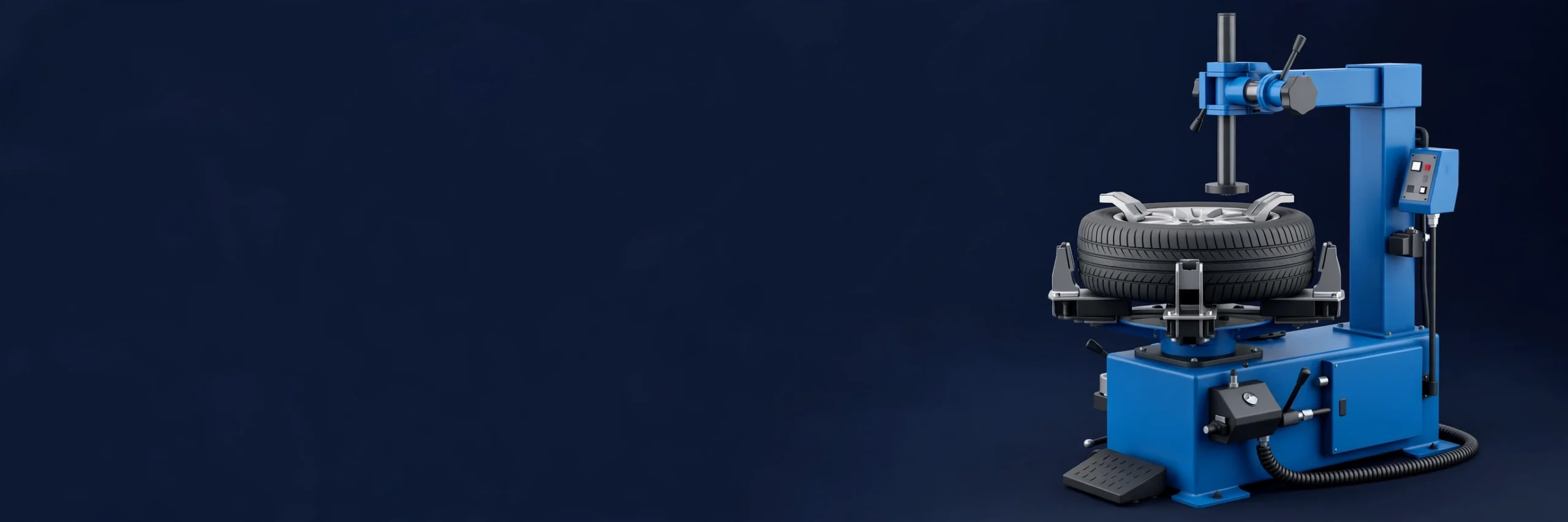
A tire changer assist arm is an extra arm on a tire changer that holds, presses, or lifts the tire while you work. It does not replace the main clamp or the mounting head, but it gives you a third hand for tires that are stiff, low profile, or hard to keep in place. If you change tires often, an assist arm can save time and reduce strain.
This guide explains what assist arms do, the common types, and when they help most. It also covers the limits, so you can judge whether the extra cost and floor space make sense for your shop.
What an assist arm does
An assist arm helps control the tire bead during mounting and demounting. It can press the bead down into the drop center of the rim, hold the tire in place while the turntable rotates, or lift a heavy tire into position. That control matters because a tire that slips or pops up can damage the bead, scratch the rim, or force you to start again.
The arm is usually mounted beside the main column and can be moved into place as needed. Some arms are manual, with a lever you push and lock. Others use air power to press with steady force. In both cases, the goal is the same: keep the tire where it needs to be, so the mounting head can do its work.
Common types of assist arms
Bead press arms
A bead press arm pushes the bead down near the mounting head. It helps with stiff sidewalls and low profile tires, where the bead resists staying in the drop center. By holding the bead down, it reduces the chance of the bead climbing back up during rotation.
Roller and holding arms
A roller arm uses a roller to guide the tire as the turntable turns. It can help keep the tire seated and reduce the effort needed to push it by hand. A holding arm clamps or rests against the tire to stop it shifting. These arms are useful when one person works alone, since they take over a job that would otherwise need a second pair of hands.
Lift assist arms
A lift assist helps raise a heavy wheel onto the changer and lower it back down. It does not replace safe lifting habits, but it reduces the load on your back and arms. For shops that handle large wheels often, a lift assist can be as valuable as a bead press.
When an assist arm helps most
An assist arm helps most with low profile tires, run flat tires, stiff new tires, and large or heavy wheels. It also helps when you work alone, when you change tires all day, or when you see frequent bead damage or rim marks. In those cases, the arm can pay for itself in saved time and fewer damaged tires.
It helps less with small, flexible tires that mount easily by hand, or in a shop that changes tires only once in a while. If your current jobs go smoothly and staff can control the tire without strain, a basic changer may be enough. Judge by your actual work, not by the feature list alone.
What to check before you buy
- Check that the arm fits your changer model and column.
- Check rim sizes and tire types you handle most.
- Check floor space and clearance around the machine.
- Check air supply needs if the arm is air powered.
- Check how the arm locks and how easy it is to move out of the way.
- Check training needs for staff who will use it.
Try the arm on a real job if you can, or ask for a clear demo. A good arm should feel smooth, lock firmly, and stay clear of the rim. If it feels awkward or blocks your view, it may slow work rather than help it.
Conclusion
Assist arms add control where tires are stiff, large, or hard to hold. They help most in busy shops and with low profile or heavy tires. For a lighter workload, a basic changer may still be the right choice. To compare options, browse the Tire Changers range and the Shop. To learn more about NexaDigital, read the About us page. For help, use the Support page or the Contact us page.